How to Choose the Best Polyester Printing Mesh for Your Projects?
Choosing the right Polyester Printing Mesh is crucial for achieving high-quality prints. The material you select impacts the clarity, durability, and overall success of your projects. With various options available, understanding your specific needs will guide your decision-making.
Consider factors like mesh count, thread diameter, and fabric type. Each aspect plays a significant role in determining the final output. Some mesh types may yield vibrant colors but compromise on durability. That’s an important consideration for long-lasting prints.
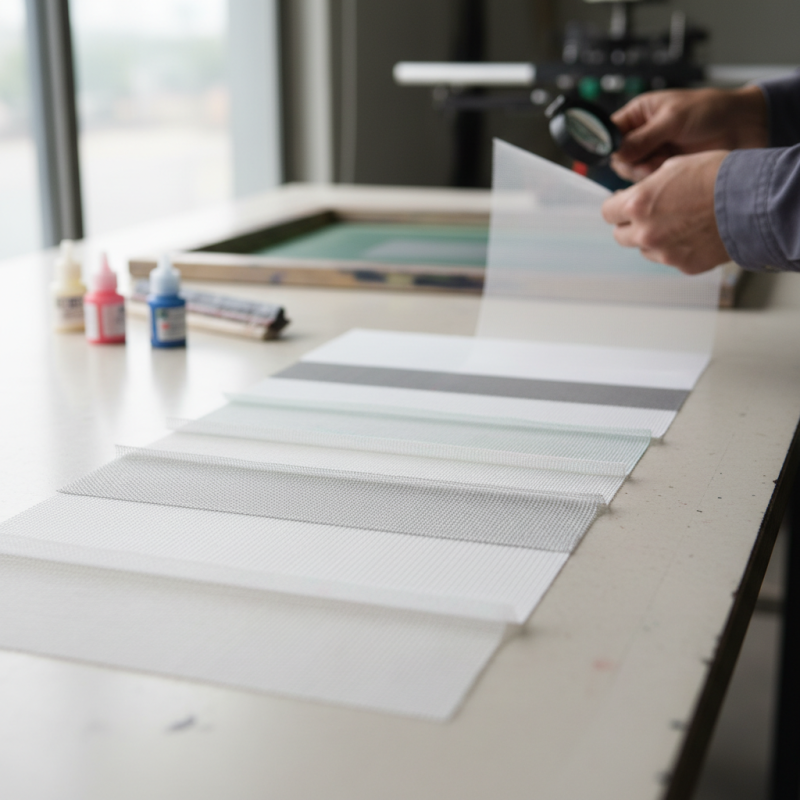
Many professionals overlook the importance of testing samples before making a final choice. This trial-and-error approach can lead to unexpected results. By evaluating different Polyester Printing Meshes, you can refine your selection and achieve the best outcome for your projects.
Understanding the Basics of Polyester Printing Mesh
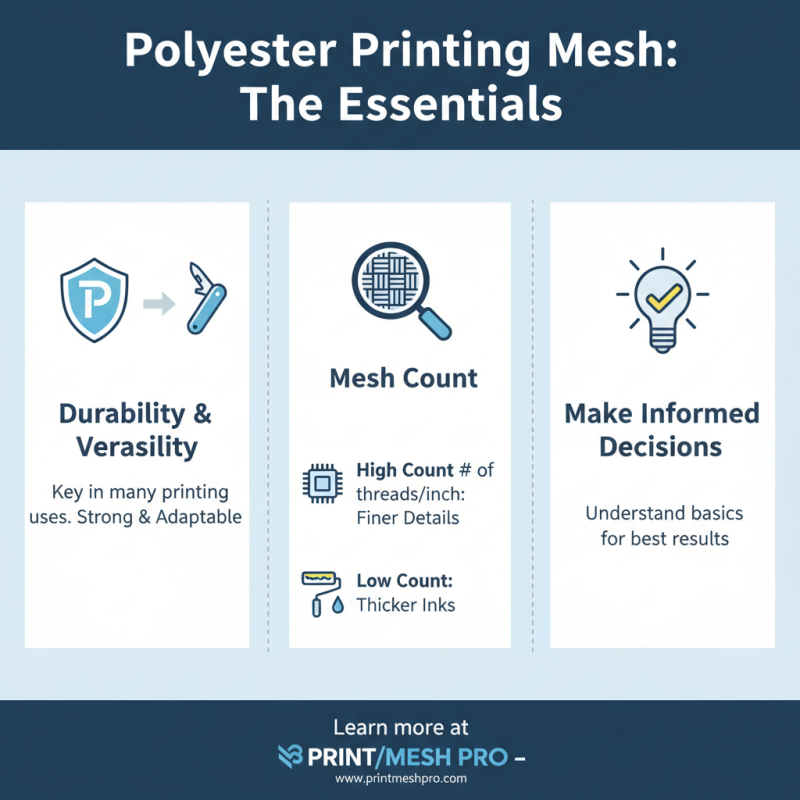
Polyester printing mesh is essential in various printing applications. This mesh type is known for its durability and versatility. It is crucial to understand its basics to make an informed decision. Polyester mesh typically comes in several mesh counts, denoting the number of threads per inch. Higher counts yield finer details, while lower counts are suitable for thicker inks.
When selecting polyester mesh, consider the thread diameter. A thicker thread offers greater durability. However, it might sacrifice some detail. Reports indicate that mesh with a diameter of around 40-60 microns balances durability and detail well. For outdoor applications, UV resistance is vital. Look for mesh specifically designed to withstand outdoor conditions.
Here are some tips:
- Always match the mesh count to your printing method.
- Test samples on your inks to gauge compatibility.
- Store mesh in a cool, dry place to prevent damage.
Understanding these fundamentals can significantly impact your project’s outcome. Knowledge of these details is not just theoretical. It influences real-world applications and can lead to costly mistakes without proper understanding. Several printers have reported issues with mesh choices affecting their output. This emphasizes the importance of research and testing in the printing process.
Factors to Consider When Choosing Polyester Printing Mesh
Choosing the right polyester printing mesh requires careful consideration of several factors. The mesh count is one of the most critical aspects. Higher mesh counts result in finer prints, making them ideal for detailed designs. Industry reports indicate that a mesh count of 110 to 160 offers a balanced option for various projects. However, using too high of a count may lead to issues with ink saturation.
Another significant factor is the thread diameter. A thicker thread provides strength, while a thinner one allows for finer details. According to research by the Screen Printing Association, using a 45µm thread diameter can yield excellent results for vibrant colors and sharp images. Evaluating your project's demands against these attributes can help you find the appropriate balance.
Additionally, the type of coating can impact your choice. Coated meshes can resist ink adhesion better, leading to cleaner prints. However, non-coated options may provide better ink flow for certain applications. It is essential to analyze the specifics of your printing method and ink type during selection. This consideration ensures that the mesh you choose aligns with your creative goals. Some users share experiences of trial and error, reminding us that even small details can significantly affect the overall outcome.
Different Mesh Counts and Their Implications for Printing
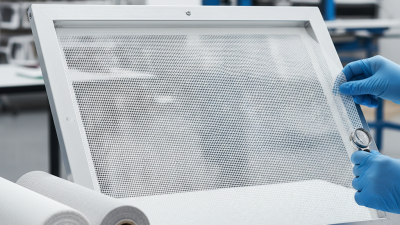
When selecting polyester printing mesh, understanding mesh counts is crucial. Mesh count refers to the number of threads per inch in both directions. Higher mesh counts, like 110 or 160, allow for more detailed prints. These counts are excellent for fine designs or high-resolution imagery. However, they can limit ink flow. This means that thicker inks may not transfer effectively.
On the other hand, lower mesh counts, such as 40 or 60, permit more ink by allowing larger openings. This is ideal for bold designs and textile printing. The trade-off here is resolution. Lower counts can cause blurriness or less detail in intricate designs. Therefore, the choice of mesh count can dramatically affect the final print’s quality.
Choosing the right mesh count also involves considering the ink type. Solvent-based and water-based inks behave differently on various counts. Test prints can provide invaluable insights, highlighting the nuances in color and detail. It’s essential to experiment and adjust based on your specific project needs, as the perfect mesh count may not exist on the first try. Finding balance is key.
Evaluating Durability and Longevity in Polyester Mesh
When selecting the best polyester printing mesh, evaluating its durability and longevity is crucial. Polyester meshes vary in strength, resistance to wear, and lifespan. A mesh that frays easily or loses its shape will not serve well, especially in high-demand environments. For high-quality printing results, durability matters.
Consider the environment your mesh will face. Extreme temperatures, moisture, and repetitive use can affect performance. High-quality polyester should resist fading and maintain tension. Be cautious with budget options. While they may offer short-term savings, they often reduce print quality and require frequent replacements.
Tips for assessment include checking the thread count and weave type. A higher thread count typically means a stronger mesh. Look for mesh with reinforced edges to prevent tearing. Ensure it can handle your specific ink type without compromising durability. Lastly, investigate user reviews or consult with experts to gauge longevity in practical settings, as real-world experiences provide insights that specifications may not reveal.
Applications of Polyester Printing Mesh in Various Industries
Polyester printing mesh plays a vital role across several industries. In textile printing, it ensures vibrant colors and sharp designs. This is essential for fashion and interior décor. In the electronics sector, it is used to create intricate designs on circuit boards. Precision is key here.
In the automotive industry, polyester mesh is applied in screen printing components. High durability is necessary for this application. The ink must withstand harsh conditions. In the packaging sector, it aids in producing detailed graphics. It enhances product visibility and appeal, driving sales.
When selecting polyester printing mesh, consider its thread count. Higher counts deliver finer detail. Testing various mesh grades can impact your project's final quality. Always assess ink compatibility. Not all inks work well with every mesh type.
For best results, keep your equipment clean. Regular maintenance can improve print quality. Monitor production conditions closely. Environmental factors can affect ink drying time. Always be ready to adapt and refine your approach. The right mesh can make a significant difference in your project outcomes.