What is Wax Fabric and How to Use It for Your Next Sewing Project
Wax fabric, also known as African wax print, has gained considerable attention in the sewing and fashion industries due to its vibrant colors and unique patterns. According to a report by the Global Textile Alliance, the demand for wax fabric has surged by 15% annually over the past five years, highlighting its growing popularity beyond traditional markets. This high demand is attributed to an increasing interest in cultural authenticity and sustainable fashion, where consumers are seeking materials that tell a story and support artisan craftsmanship.
Renowned textile expert Dr. Amina Abubakar points out, “Wax fabric is not just a material; it’s a canvas for cultural expression, bridging traditional aesthetics with modern fashion trends.” This statement encapsulates the essence of wax fabric, showcasing its versatility and significance in contemporary sewing projects. As more individuals venture into DIY fashion, understanding the intricate characteristics and uses of wax fabric becomes essential. In this article, we will explore the different aspects of wax fabric, including its history, unique properties, and practical applications that can inspire your next sewing project. Whether you are a seasoned tailor or a novice enthusiast, incorporating wax fabric can elevate your creations to new heights.
What is Wax Fabric? An Overview of Its History and Characteristics
Wax fabric, often recognized for its vibrant patterns and durability, has deep roots in African culture. Originally crafted by Dutch merchants in the 19th century, this textile was designed to imitate Indonesian batik cloth. Its unique surface is coated with wax, which not only enhances the fabric's strength but also imparts a shiny finish. Historically, wax fabric has been used for various purposes, from traditional garments to home decor, symbolizing cultural identity and expression.
The characteristics of wax fabric make it a popular choice among seamstresses and designers. Its heavier weight offers durability, while the wax finish helps resist stains and water, making it functional as well as aesthetically pleasing. The fabric's vibrant colors are achieved through a meticulous dyeing process, resulting in intricate patterns that often carry significant cultural meanings. As a result, wax fabric is not only a practical choice for sewing projects but also a medium for storytelling through textile art.
Types of Wax Fabric: Exploring Different Styles and Patterns
Wax fabric, known for its vibrant colors and intricate patterns, is a favorite in various sewing projects, especially in African fashion. This fabric, coated with wax to achieve a unique finish, offers not only aesthetic appeal but also durability. According to a report by Market Research Future, the global wax fabric market is anticipated to grow at a significant rate, indicating the rising popularity and demand for this material across different cultures and regions.
When it comes to styles and patterns, wax fabric presents a wealth of choice. Traditional African wax prints often showcase bold motifs and geometric designs, drawing inspiration from cultural heritage and storytelling. Additionally, contemporary designers have embraced wax fabric, incorporating modern patterns that attract a wider audience. A study published by the International Journal of Fashion Design, Technology and Education highlighted that these prints not only serve fashion needs but also reflect social and cultural contexts, making them an essential part of sewing projects that aim to convey a specific identity or message. Whether choosing classic elephant motifs or modern abstract designs, the versatility of wax fabric allows for creative expression tailored to personal preferences.
How to Select the Right Wax Fabric for Your Sewing Project
When selecting the right wax fabric for your sewing project, it’s essential to consider factors such as weight, color, and finish. According to a 2022 fabric industry report, the demand for wax fabric has increased by over 20% in the last year, reflecting its popularity in contemporary fashion and home decor. Wax fabrics, often made from cotton with a wax coating, provide durability and a water-resistant quality that is ideal for various applications. Choosing the right weight is crucial; lighter weights are perfect for garments, while heavier weights work well for bags or upholstery.
Tips: Always test the wax fabric under the sewing machine you plan to use, as different machines can handle varying thicknesses differently. It is advisable to wash a small sample to see how the fabric behaves after cleaning, ensuring that the colors remain vibrant and the wax coating intact. Additionally, consider the color palette you are working with; brighter colors add a playful dimension to outfits, while muted tones are great for sophisticated home items.
Ultimately, understanding the qualities of wax fabric and making informed choices can significantly impact the success of your sewing project. A thorough assessment of your needs, along with researching suitable wax fabric sources, can lead to beautiful and functional creations.
Tips for Sewing with Wax Fabric: Techniques and Tools Needed
Sewing with wax fabric can be a rewarding experience, as its unique properties provide a vibrant, water-resistant finish perfect for a variety of projects. However, to achieve the best results, it's essential to use the right techniques and tools. Begin by gathering your materials: a sharp rotary cutter or fabric shears, a heavy-duty sewing machine needle, and thread that matches the weight of your fabric. These will help ensure clean cuts and sturdy seams, minimizing the risk of fraying.
When working with wax fabric, proper preparation is key. Always pre-wash your fabric to remove any finishes that may interfere with the sewing process. Additionally, using a Teflon foot on your sewing machine can significantly improve your stitching, as it glides over the waxy surface more easily than standard presser feet. For best results, sew with a longer stitch length to prevent puckering, and always test your sewing settings on a scrap piece before starting your main project.
Tip: When cutting wax fabric, use a rotating cutting mat to prevent tearing; this allows for smooth movements without compromising the fabric's integrity. Also, consider using clips instead of pins for holding layers together, as traditional pins can leave permanent holes in the wax coating. By following these tips, you’ll be well on your way to creating stunning pieces with wax fabric.
Creative Ideas for Using Wax Fabric in Your Next Fashion Project
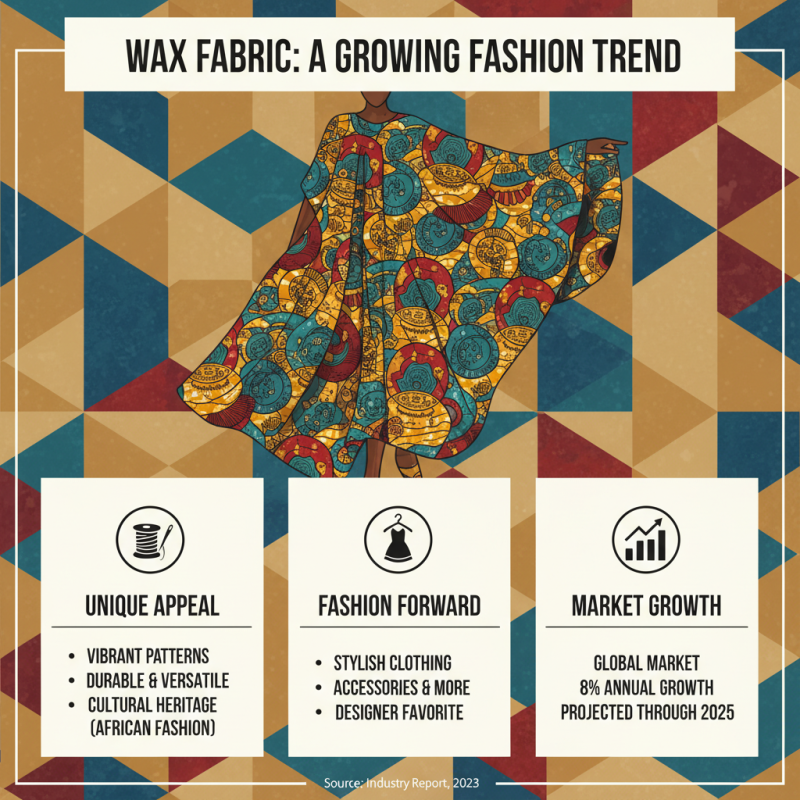
Wax fabric, known for its unique, vibrant patterns and durability, is gaining popularity among fashion enthusiasts and designers alike. This fabric, often used in African fashion, is perfect for creating stylish clothing items and accessories. According to a recent industry report, the global market for wax fabric is projected to grow annually by 8% through 2025, highlighting its rising demand in the fashion world.
When it comes to creative ideas for using wax fabric in fashion projects, think beyond traditional garments. Wax fabric can be transformed into statement bags, headwraps, or even home decor items like cushion covers. The fabric's water-resistant properties make it particularly great for outdoor wear and accessories. Experiment with paneling or patchwork techniques to make unique, individualized pieces that stand out.
**Tips:** When working with wax fabric, always pre-wash it by hand to avoid any damage to the patterns. Additionally, using a rotary cutter can provide more accurate cuts compared to regular scissors, ensuring a cleaner finish for your projects. Embrace the fabric's bold designs and create vibrant layers or contrasting elements to enhance your overall look.