What is Wax Polyester and How is it Used in Manufacturing?
Wax Polyester is increasingly significant in manufacturing industries. It is a unique material known for its versatility and durability. Experts like Dr. Emily Zhang, a leading authority in polymer science, state, "Wax Polyester shines due to its exceptional moisture resistance and finish quality."
In recent years, the applications of Wax Polyester have expanded. It is used in coatings, textiles, and molded products. Due to its waxy finish, it provides aesthetic appeal while enhancing performance. Nonetheless, challenges arise in balancing cost with quality. Manufacturers often struggle to find the right mix.
The future of Wax Polyester looks promising. With continual advancements in technology, it holds potential for improved manufacturing processes. However, companies must remain diligent. They need to reflect on sustainability and material sourcing. This balance is crucial for long-term success in the industry.
What is Wax Polyester?
Wax polyester is a specific type of polyester designed to have wax-like properties. This material combines the durability of polyester with the low-friction characteristics of wax. Industries use it for applications ranging from textiles to coatings. The unique formulation allows wax polyester to resist water and improve surface finish.
In the textile sector, wax polyester enhances fabric performance. According to a recent market report, the demand for wax polyester in textiles is projected to grow by over 5% annually. This growth is due to its ability to add water repellency and durability to fabrics. While highly beneficial, manufacturers must note that improper processing can affect its performance.
Tip: Always ensure proper temperature controls when working with wax polyester. Temperature fluctuations can hinder the material's properties.
Wax polyester is also found in coatings and paints. It offers a smooth finish and added protection against elements. In construction, the product's resilience is crucial as exposure to harsh conditions is common. However, high humidity can sometimes lead to issues with adhesion.
Tip: Conduct surface tests before large-scale applications. This step will help identify adhesion strengths and potential challenges.
Understanding wax polyester allows manufacturers to leverage its unique qualities effectively. An informed approach can maximize its benefits while minimizing imperfections during application.
Properties and Characteristics of Wax Polyester
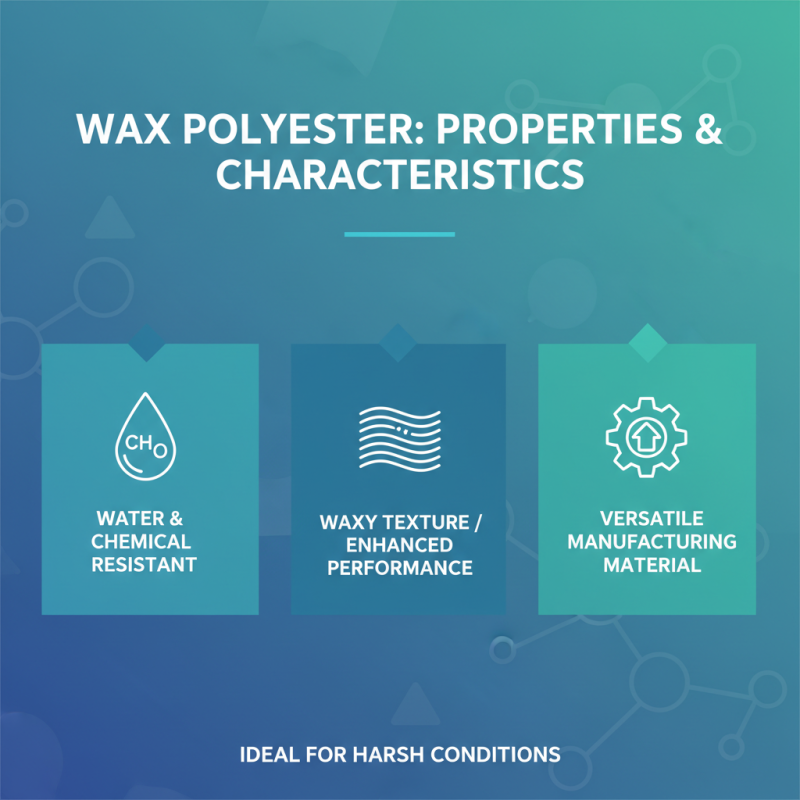
Wax polyester is a unique material widely appreciated in manufacturing. Its properties make it suitable for various applications. This synthetic polymer has a waxy texture, which significantly enhances its performance in several environments. One of its standout characteristics is its resistance to water and chemicals. This feature makes wax polyester an excellent choice for products exposed to harsh conditions.
Another notable property is its durability. Wax polyester can withstand wear and tear, providing longevity to manufactured goods. Its flexibility allows for easy molding into different shapes. When used in textiles, it offers a soft feel while maintaining strength. This combination of durability and comfort is often sought after in both industrial and consumer products.
Not everything is perfect with wax polyester, though. The environmental impact of production can raise concerns. Its manufacturing process may rely on non-renewable resources. It’s crucial for manufacturers to reflect on sustainable alternatives. This awareness can shape future innovations in this material. As industries evolve, so should the approaches to materials like wax polyester.
Common Applications of Wax Polyester in Manufacturing
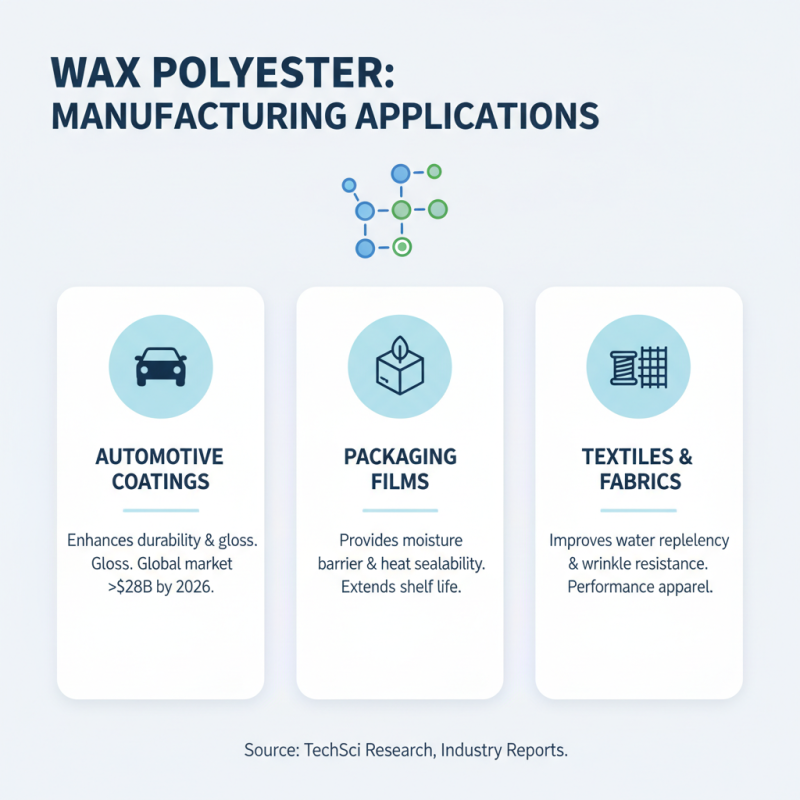
Wax polyester has emerged as a crucial material in various manufacturing sectors. Its unique properties make it suitable for a range of applications. In the automotive industry, wax polyester is utilized in coatings to enhance durability and gloss. According to a report from TechSci Research, the global demand for automotive coatings is expected to surpass $28 billion by 2026, highlighting the material's importance.
In the construction industry, wax polyester is often used for waterproofing membranes. These membranes prevent water infiltration, improving building longevity. The increasing number of construction projects, projected to grow at a CAGR of 5% through 2025, drives the need for reliable materials like wax polyester. Additionally, its resistance to UV light and temperature makes it ideal for outdoor applications.
Tips: Always consider the specific properties needed for your application. Test wax polyester in small batches before large-scale production. Quality control is essential; variations in formulation can impact performance. Proper assessment can mitigate risks of poor adhesion or durability issues.
Advantages of Using Wax Polyester in Products
Wax polyester is gaining popularity in various manufacturing sectors. Its unique composition makes it suitable for diverse applications. This material blends wax and polyester, creating a flexible yet durable product. Manufacturers appreciate its water resistance and durability. These qualities enhance the longevity of finished goods.
Using wax polyester offers several advantages. First, it provides excellent weather resistance. This feature is crucial for outdoor applications, as it withstands harsh conditions. Second, the material can easily be molded into complex shapes. This versatility is beneficial for industries needing customized solutions. Third, it has a smooth finish that adds aesthetic value to products.
However, the use of wax polyester can present challenges. It might not adhere well to certain surfaces, making some applications tricky. Additionally, sourcing high-quality materials can be difficult. Manufacturers should consider these factors closely. Balancing benefits and drawbacks is vital for successful usage in production.
Advantages of Wax Polyester in Manufacturing
Manufacturing Process Involving Wax Polyester
Wax polyester is a fascinating material used in various manufacturing processes. It combines the properties of wax and polyester to create a robust, flexible substance ideal for several applications. Manufacturers often utilize wax polyester in coatings and sealants, where its water-resistant and durable nature is crucial.
In the manufacturing process involving wax polyester, the initial step involves heating the polyester to a temperature that allows it to blend with wax. This combination results in a homogenous mixture that can be easily applied. After heating, the mixture is often cooled and solidified into sheets or pellets. These forms can be easily transported and handled in subsequent steps.
The next phase typically includes modifying the wax polyester for specific applications, such as enhancing texture or adding color.
Despite its advantages, using wax polyester can present challenges. Achieving the right balance of wax and polyester requires careful consideration. Too much wax may reduce the final product's strength, while too little can compromise its water resistance. Manufacturers must test and refine their formulas regularly to ensure consistent quality. This reflective approach is essential in optimizing production processes and meeting industry standards.