Leave Your Message
Choosing a China top Polyester Cloth Fabric supplier requires more than comparing prices on a product page. Fabric may look similar under bright showroom lights, yet perform differently after washing, dyeing, or daily abrasion.
A dependable supplier should explain fiber content, denier, GSM, weave structure, width tolerance, and finishing methods clearly. Ask for recent test reports, production samples, and colorfastness results. Check whether the factory controls quality from yarn inspection to final packing. Small details matter. A loose selvage can disrupt cutting. Uneven dyeing can damage an entire order.
Dr. Seshadri Ramkumar, a respected textile scientist, has emphasized, “Textiles are technical products, not merely decorative materials.” That principle shapes this guide. Polyester Cloth Fabric can support apparel, home textiles, bags, filtration products, and industrial applications. However, one specification rarely suits every use. A lightweight fabric may feel smooth but lack tear strength. A heavy fabric may last longer but increase shipping costs and sewing difficulty.
China offers broad manufacturing capacity, flexible customization, and competitive production networks. Still, “low price” should never become the only decision. Supplier verification, sample approval, transparent communication, and realistic lead times deserve equal attention. Some factories appear highly capable online but provide limited evidence of consistent production. That is a warning sign.
This guide compares practical supplier criteria, including technical ability, certifications, export experience, customization, and after-sales support. It will not remove every sourcing risk. No supplier is flawless. Careful questions, documented tests, and an honest review of your own requirements can produce a safer decision.
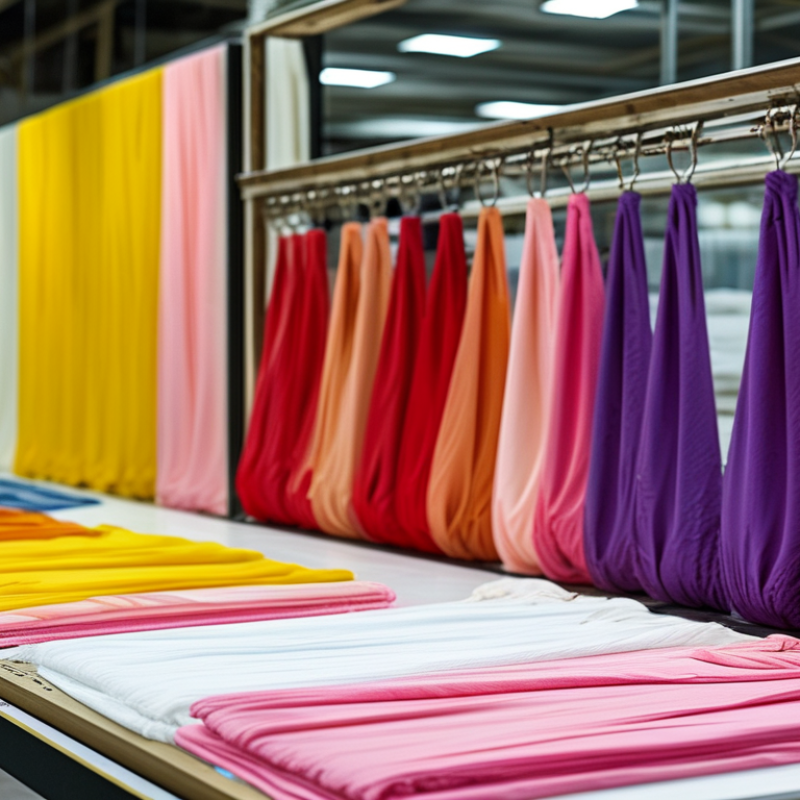
What defines a top polyester cloth fabric supplier in China? It is not only production volume or a polished website. In practice, reliability begins with clear technical control. A capable supplier should state fiber content, fabric construction, GSM, usable width, finish, and shrinkage tolerance. Sample cards should match bulk rolls. That sounds basic. It is often where problems begin.
During supplier evaluations, I look for documented testing and repeatable inspection. Fabric should be checked for color fastness, tensile strength, pilling, width, and weight. Independent laboratory reports can support internal records, but they should be current and traceable. A serious factory also explains its dyeing process, wastewater controls, and material sources without vague promises. Certifications may help, yet a certificate alone proves little. Ask who issued it and what scope it covers.
Strong communication matters as much as machinery. The supplier should confirm sample approval, production timing, packaging, and corrective action in writing. A small trial order can reveal roll consistency, edge quality, and response speed. I have seen attractive samples fail during mass production. That risk deserves attention. Top suppliers welcome reasonable audits and admit limitations. No supplier is flawless.
| Evaluation Dimension | Practical Benchmark | Why It Matters | |
|---|---|---|---|
| Product Range | Woven and knitted polyester fabrics, including recycled polyester, spun polyester, filament polyester, mesh, oxford, and functional textiles | Current product catalogue, construction details, fiber composition, width range, weight range, and sample cards | A broad but clearly documented range makes it easier to match the fabric with apparel, home textile, outdoor, or industrial applications. |
| Fiber Composition | Composition stated by percentage, such as 100% polyester or specified polyester-blend ratios | Fiber-content declaration, laboratory test report, and production specification sheet | Accurate composition information supports legal labeling, performance selection, and consistent purchasing decisions. |
| Fabric Weight | Weight specified in grams per square metre (GSM), with an agreed production tolerance | Pre-production sample, GSM test result, inspection record, and tolerance written in the purchase contract | GSM affects hand feel, durability, opacity, drape, shipping weight, and end-use performance. |
| Fabric Width | Finished width and usable width clearly separated in the specification | Width measurement report, roll inspection data, and packing specification | Usable width directly influences cutting efficiency, material consumption, and production cost. |
| Color Consistency | Color approval based on a physical standard or agreed color reference, with batch-to-batch control | Lab-dip approval, shade band, lightbox evaluation record, and batch color inspection report | Reliable shade control reduces rejected goods and prevents visible color differences between production lots. |
| Colorfastness | Testing selected according to the intended market and application, including washing, rubbing, perspiration, and light exposure where relevant | Test method, test date, sample identification, laboratory report, and required acceptance level | Colorfastness performance affects product appearance, customer satisfaction, and compliance with buyer requirements. |
| Physical Performance | Performance parameters defined for tensile strength, tear strength, seam performance, abrasion, or pilling as applicable | Third-party or in-house test reports linked to the exact fabric construction and production batch | Performance testing helps confirm that the fabric is suitable for its intended service conditions. |
| Chemical Compliance | Materials screened against applicable restricted-substance and chemical-safety requirements in the destination market | Recent chemical test report, restricted-substance declaration, and documented corrective-action process | Chemical compliance reduces regulatory, environmental, and product-liability risks. |
| Recycled Polyester Traceability | Recycled content percentage and source are documented when recycled polyester is offered | Transaction records, material declarations, chain-of-custody documents, and certification records where required | Traceability helps substantiate recycled-content claims and prevents unsupported sustainability statements. |
| Quality Management | Documented Quality System | Inspection procedure, incoming-material checks, in-process controls, final inspection records, and complaint-handling procedure | A repeatable quality system is more dependable than relying only on final visual inspection. |
| Production Capacity | Capacity stated by fabric type, machine category, and realistic monthly output rather than a single general figure | Production plan, machine list, capacity calculation, utilization assumptions, and current order schedule | Transparent capacity information helps prevent missed delivery dates during peak seasons. |
| Sampling Service | Development samples available for color, construction, finish, width, and weight confirmation | Sample request process, sample approval form, revision history, and retained reference sample | A controlled sampling process reduces misunderstandings before bulk production begins. |
| Minimum Order Quantity | MOQ disclosed separately for stock colors, custom colors, new constructions, and special finishes | Written quotation showing MOQ, setup charges, sample charges, and conditions for mixed orders | Clear MOQ rules make landed-cost calculations and inventory planning more accurate. |
| Lead-Time Control | Separate timelines provided for sampling, lab dips, raw-material preparation, production, inspection, and dispatch | Order confirmation, production schedule, milestone updates, and documented delay-escalation process | Detailed milestones make it easier to manage launches, replenishment, and shipping arrangements. |
| Packing and Roll Identification | Each roll identified with style, color, lot number, length, gross weight, net weight, and inspection status | Packing list, roll labels, photographs before loading, and loading inspection record | Accurate identification supports warehouse control, claims management, and production traceability. |
| Export Documentation | Commercial invoice, packing list, transport document, and other destination-specific documents prepared accurately | Sample document set, export procedure, document-review checklist, and customs information | Complete documentation helps reduce customs delays and shipment discrepancies. |
| Communication and Technical Support | Written technical specifications, timely sample feedback, and a defined contact for quality or production issues | Specification template, response-time expectations, meeting records, and corrective-action reports | Strong technical communication prevents specification drift and speeds up problem resolution. |
| Sustainability Transparency | Environmental claims supported by measurable information rather than generic statements | Energy or water data, waste-control records, wastewater documentation where relevant, and supporting certifications | Evidence-based sustainability information improves credibility and supports responsible sourcing decisions. |
| Pre-Shipment Inspection | Inspection completed against approved samples, specifications, quantity, appearance, packing, and labeling requirements | Inspection checklist, defect classification, roll-by-roll findings, and corrective-action confirmation | Pre-shipment inspection identifies nonconformities before the goods leave the production site. |
| Note: The benchmarks above are practical supplier-selection criteria rather than rankings of individual companies. Requirements should be adjusted according to the fabric’s end use, destination-market regulations, buyer specifications, and approved test methods. | |||