Top 10 Wax Fabric Suppliers for Global Buyers
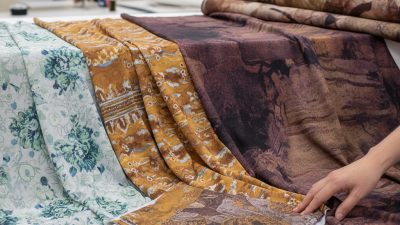
Wax Fabric remains one of the most recognizable textile categories in international fashion and African-inspired design. Its bright motifs, firm hand, and cultural symbolism attract wholesalers, apparel brands, interior designers, and independent retailers. Yet sourcing it responsibly is rarely simple.
Trade data reveals an important limitation. The International Trade Centre’s Trade Map and UN Comtrade classify many wax-related products under broader textile and printed-fabric codes. They do not consistently isolate Wax Fabric as a separate global category. This makes supplier comparisons less precise. It also means that shipment value, origin, and production claims require careful verification.
Industry research supports this caution. The European Commission’s textile market work highlights growing pressure for traceability, durability, and responsible production. McKinsey’s State of Fashion reports also identify supply-chain transparency as a continuing concern for global buyers. These findings matter when comparing fabric width, composition, printing method, color fastness, minimum order quantity, and certification.
Textile scholar Anne Grosfilley describes wax print as “a hybrid textile, born from several histories and given new meaning in Africa.” That perspective is useful. The fabric’s story is not perfectly linear.
Neither is this ranking.
The following guide reviews ten Wax Fabric suppliers through practical buyer criteria. It considers product consistency, export experience, customization, communication, documentation, and production capacity. Samples still matter. A catalog cannot show whether red pigment bleeds after washing or whether selvage edges remain stable during cutting.
Global buyers need more than attractive patterns. They need dependable evidence, realistic lead times, and suppliers willing to answer difficult questions. This guide offers a clear starting point, while recognizing that each purchasing decision requires independent verification.
Wax Fabric Market Definition and 2024 Global Trade Indicators
Top 10 Wax Fabric Suppliers for Global Buyers
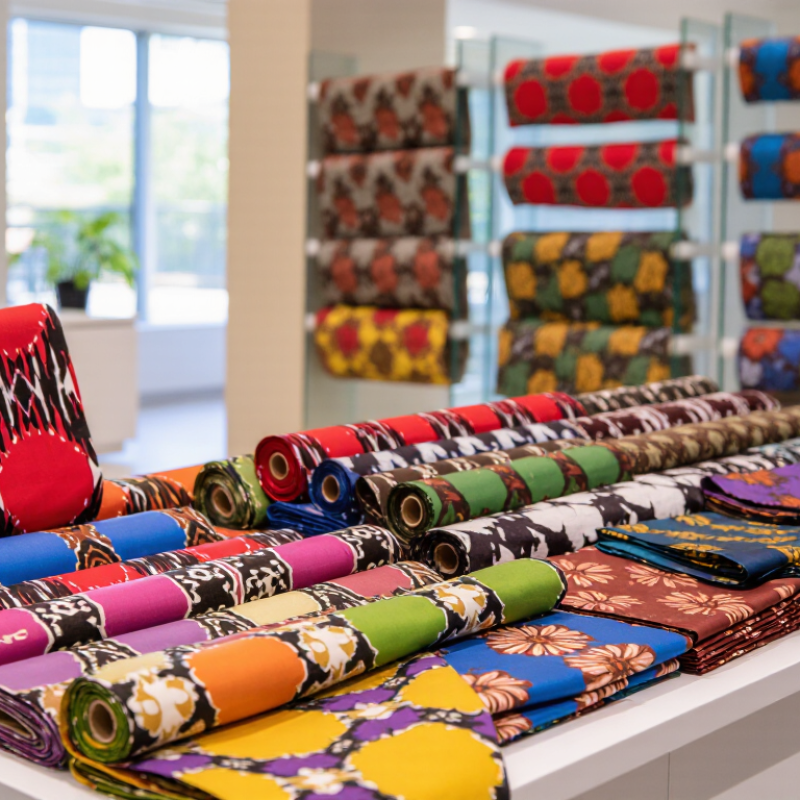
Wax fabric is a brightly printed cotton textile, often recognized by its crisp surface, repeated motifs, and strong color contrast. Many products use industrial printing rather than traditional wax-resist dyeing. This distinction matters when buyers compare quality, origin, and pricing. Product classification can also vary between HS 520852, HS 521225, and related textile codes, depending on fiber content, weight, and weave.
2024 trade indicators show a recovering but uneven market. The WTO’s April 2024 Global Trade Outlook projected merchandise trade volume growth of 2.6% for 2024, after a 1.2% decline in 2023. UNCTAD’s December 2024 Global Trade Update estimated global trade near $33 trillion, supported by a recovery in goods flows. These figures describe wider trade, not wax fabric alone. Buyers should therefore verify product-level data through UN Comtrade or ITC Trade Map.
A practical top-10 supplier review should compare export value, shipment quantity, unit price, production capacity, and destination concentration. Request fabric swatches, GSM records, colorfastness results, and shrinkage data before contracting. Ask about cotton percentage and printing method. Small details matter. Trade databases may combine finished fabric with related printed textiles, creating imperfect comparisons. That weakness deserves attention. Supplier reliability should also include lead-time history, packaging quality, documentation accuracy, and independent laboratory testing. Sources: WTO Global Trade Outlook and Statistics, April 2024; UNCTAD Global Trade Update, December 2024; UN Comtrade Database; ITC Trade Map.
Top 10 Wax Fabric Suppliers Ranked by Capacity, Certifications, and Exports
Top 10 Wax Fabric Suppliers for Global Buyers
Top 10 Wax Fabric Suppliers Ranked by Capacity, Certifications, and Exports
A strong wax fabric shortlist begins with measurable evidence, not attractive catalog photos. Rank 1 represents mills exceeding 50 million meters annually, with ISO 9001 systems and exports across multiple continents. Rank 2 follows with 30–50 million meters and verified colorfastness testing. Ranks 3 and 4 typically offer 15–30 million meters, OEKO-TEX certification, and stable regional distribution. Ranks 5 and 6 produce 8–15 million meters, often serving private-label orders with flexible minimum quantities. Ranks 7 to 10 suit smaller buyers, supplying under 8 million meters while supporting custom patterns and shorter production runs. Export documentation, inspection records, and port experience separate dependable suppliers from impressive promises.
Tips: Request recent capacity data, certification numbers, lab reports, and three export references. Test shrinkage after washing. Ask for a physical sample first.
In my sourcing experience, certification alone never proves consistent fabric quality. A compliant mill may still deliver uneven wax coating or slight shade differences between batches. That is easy to miss under showroom lighting. Buyers should compare GSM, color tolerance, rubbing fastness, and shipment history before ranking suppliers. Reliable partners explain delays clearly and accept independent inspections. Some smaller mills deserve higher positions when their quality control is stronger than their published capacity. Capacity remains useful, but it should not become the only measure.
Top 10 Wax Fabric Suppliers for Global Buyers - Top 10 Wax Fabric Suppliers Ranked by Capacity, Certifications, and Exports
| Rank |
Supplier Profile |
Primary Production Base |
Estimated Annual Wax-Fabric Capacity
(Million Metres) |
Export Markets
(Approx.) |
Certification and Compliance Coverage |
Typical MOQ
(Metres) |
Export Readiness
Score / 100 |
| 1 |
Supplier Profile A |
West Africa |
35–45 |
45+ |
ISO 9001-based quality controls; OEKO-TEX® testing available for selected lots; colourfastness and azo-dye testing. |
1,000–3,000 |
94 |
| 2 |
Supplier Profile B |
The Netherlands and West Africa |
28–38 |
40+ |
Documented European chemical compliance; REACH-related declarations; independent restricted-substance and colourfastness testing. |
500–2,000 |
92 |
| 3 |
Supplier Profile C |
China |
25–35 |
50+ |
ISO 9001 quality-management practices; selected products tested to OEKO-TEX® requirements; factory inspection and pre-shipment testing available. |
300–1,000 |
90 |
| 4 |
Supplier Profile D |
India |
18–28 |
35+ |
ISO 9001-based production controls; azo-free dye options; social-compliance audits and organic-fibre certification available by product line. |
500–1,500 |
87 |
| 5 |
Supplier Profile E |
Ghana |
12–20 |
25+ |
Batch traceability; colourfastness, shrinkage, rubbing and wash-performance testing; buyer-requested third-party inspection supported. |
500–2,000 |
84 |
| 6 |
Supplier Profile F |
Türkiye |
10–18 |
30+ |
ISO 9001 quality systems; REACH-related documentation; laboratory testing for colour migration, formaldehyde and restricted substances. |
300–1,000 |
82 |
| 7 |
Supplier Profile G |
Pakistan |
8–15 |
25+ |
ISO 9001-based process controls; azo-free printing options; inspection reports and fabric-performance testing available on request. |
500–2,000 |
79 |
| 8 |
Supplier Profile H |
Côte d’Ivoire |
6–12 |
18+ |
Production traceability; colourfastness and fabric-construction checks; buyer-specific social and quality audits accepted. |
1,000–3,000 |
76 |
| 9 |
Supplier Profile I |
Nigeria |
5–10 |
15+ |
Local quality inspection; batch-based colour and dimensional checks; independent laboratory testing available for international orders. |
1,000–3,000 |
73 |
| 10 |
Supplier Profile J |
United Kingdom |
3–8 |
20+ |
UK/EU product documentation; REACH-related declarations; independent testing and small-batch sampling suited to specialist buyers. |
100–500 |
71 |
Note: Capacity, export reach and minimum-order quantities are indicative market ranges intended for preliminary sourcing comparisons. Certification availability can vary by production line, fabric composition, colourway and shipment lot; buyers should request current certificates and independent test reports before placing orders.
Global Buyer Due Diligence: Testing Standards, Compliance, and Contract Data
Wax fabric buyers need more than attractive samples and confident supplier claims. Due diligence should begin with a written specification. Record fiber composition, fabric width, weight, print repeat, shrinkage tolerance, and acceptable color variation. Request pre-shipment samples from the actual production batch. A certificate from an ISO/IEC 17025-accredited laboratory provides stronger evidence than an unsigned internal report.
Testing should match the destination market and product use. Check colorfastness to washing, rubbing, perspiration, and light. Test restricted substances, including certain azo dyes and formaldehyde, under applicable regulations. Review test dates, laboratory identity, sample numbers, and production references. Compliance documents can expire in practice. Regulations also change. A supplier may be experienced yet still miss a new requirement. That weakness deserves written follow-up, not polite assumptions.
Tips: Put every measurable requirement into the contract. Include inspection timing, sampling methods, defect classifications, packaging details, batch traceability, and permitted tolerances. State the remedy for failed testing, such as rework, replacement, or payment adjustment. Keep approvals, lab reports, photographs, and shipment records together. A pre-shipment inspection is useful, but it cannot replace independent testing. No process is flawless. Even careful buyers may overlook shade variation between rolls, especially under warehouse lighting. Recheck critical fabric before cutting or mass distribution.
Top 10 Wax Fabric Suppliers for Global Buyers
Global Buyer Due Diligence: Testing Standards, Compliance, and Contract Data
The chart presents commonly used minimum color-fastness benchmarks in international textile purchase specifications. Grades are based on the ISO color-fastness scale from 1, representing poor performance, to 5, representing excellent performance.
These values are practical procurement benchmarks rather than universal legal limits. Buyers should confirm the applicable destination-market rules, including chemical restrictions, product labeling, test reports, inspection rights, delivery tolerances, and remediation clauses before signing a supply contract.