Where to Buy the Best Polyester Patterned Fabric in 2026?
Choosing where to buy Polyester Patterned Fabric in 2026 means looking beyond a striking print. Supplier consistency, fabric specifications, and dependable sampling matter just as much. Textile Exchange’s Materials Market Report 2024 estimates global fiber production reached 124 million tonnes in 2023. It reports polyester represented about 57% of that volume. This is fiber-market context, not a measure of patterned-fabric sales. That distinction matters.
Buyers can compare established textile mills, specialist print houses, and vetted business-to-business marketplaces. Ask each supplier for the fiber composition, fabric weight, usable width, print method, minimum order, and production lead time. Request a physical swatch before approving bulk yardage. Check whether fine lines stay sharp and colors remain consistent under daylight and indoor lighting. Samples matter. For practical performance, request relevant test results for colorfastness, shrinkage, and abrasion rather than relying on product photos or broad claims.
A strong supplier should answer questions clearly and provide traceable product information. If sustainability claims influence your choice, verify the specific material and certification scope; a badge alone tells little. Compare quotes on the same specifications, including shipping and sample costs. Not every print lasts. A low price may reflect lighter fabric, limited testing, or inconsistent repeat runs, though those possibilities need confirmation. The best source is therefore not simply the cheapest listing. It is the supplier whose samples, documentation, communication, and delivery terms match your project. This guide will help you compare buying channels and identify the details worth checking before placing an order.
Textile Exchange: Polyester Made Up 57% of 124M Tonnes of Fiber in 2023
In 2023, polyester made up 57% of the world’s 124 million tonnes of fiber, according to Textile Exchange—about 70.7 million tonnes. That scale helps explain why patterned polyester is widely available, from lightweight lining to sturdy upholstery fabric. But volume is not a quality label. Numbers matter.
In 2026, compare established textile wholesalers, specialist fabric shops, and mills or converters that provide technical details and sample cuts. Ask for fiber composition, fabric weight, usable width, print method, colorfastness, shrinkage, and care instructions. For curtains, check the swatch in daylight. For bags or upholstery, fold and rub it gently to assess its feel and surface. Online, a vivid pattern can hide a stiff hand or a dull reverse.
The headline figure describes polyester overall, not patterned fabric or its recycled content. If recycled fiber matters to you, request documentation and check whether it applies to the finished fabric or only part of it. I would not choose from a product photo alone. Even a useful swatch cannot guarantee that a full production lot will look identical; color can vary between batches.
Define Print, Weight, Width, and Performance Requirements Before Sourcing
Where to Buy the Best Polyester Patterned Fabric in 2026?
Before contacting suppliers, define what the fabric must do. A floral print for curtains needs different qualities from a geometric pattern on seat cushions. Record the motif scale, repeat size, and preferred print method. Ask whether the repeat is measured vertically, horizontally, or both. Small details matter.
Set a target weight in grams per square meter, but do not treat weight as a quality score. A heavier fabric may hang well yet feel too stiff for gathered drapes. Specify usable width, excluding selvages, and estimate how much fabric your cutting layout requires. A swatch beside a ruler can reveal a repeat mismatch before a full order. Ask for a current sample, not only a digital image.
Performance needs should match real use. For upholstery, request abrasion and seam-slippage information; for window panels, check lightfastness and the effect of washing. Get care instructions in writing, and confirm that the tested fabric matches the printed version you plan to buy. Ask for proof. Supplier specifications can be incomplete, and I would not assume one test result answers every use question. If color consistency matters, compare samples from the same production lot when possible. Keep your requirements in a short checklist, then use it to compare quotes on equal terms.
Compare Mills, Fabric Wholesalers, Print Specialists, and Online Marketplaces
Where to buy polyester patterned fabric in 2026 depends on the quantity, print detail, and consistency you need. Mills may offer better control over base cloth and repeat production, but often require larger orders. Ask about minimum quantities, color tolerances, and whether the same fabric construction will be available later. A printed swatch is useful; a written specification is better.
Fabric wholesalers suit buyers who need several patterns without ordering full mill runs. Request the fabric weight, width, fiber composition, and stock status before comparing prices. Print specialists are worth considering for custom artwork, precise color matching, or small test runs. Check whether the quoted price includes setup, sampling, and repeat-print fees.
Online marketplaces can provide broad choice and quick browsing, but listings may omit important production details. Ask for a physical sample and confirm that it matches the listed composition. Small tests help. I would not treat attractive photos or low prices as proof of dependable quality; compare samples under daylight and after washing, then judge whether the supplier’s terms fit your actual schedule.
Check Supplier Traceability and OEKO-TEX Testing for 1,000+ Substances
Where to Buy the Best Polyester Patterned Fabric in 2026?
A reliable source for patterned polyester should show where its fabric comes from and how each production lot is tracked. Ask for the mill’s name, lot number, and records linking the finished fabric to its source. Can the supplier match those details to your sample? That detail matters.
For chemical safety, request a current OEKO-TEX STANDARD 100 certificate and check that its product scope matches the fabric you plan to buy. The standard tests textile products for a wide range of harmful substances, with requirements covering more than 1,000 substances. Testing criteria and product classes can differ, so read the certificate rather than relying on a logo or a sales claim. Ask for the certificate number, validity dates, and a test report tied to the relevant material.
Paperwork can look tidy while a delivered roll differs from the swatch. Keep the swatch. Compare its print alignment, color, and fabric feel with a production sample, then record the lot number on your order. Request written notice if the mill, dyeing process, or fabric composition changes. I’d also ask how the supplier handles mismatched lots; that answer may be less polished, but it can reveal gaps worth checking.
Where to Buy the Best Polyester Patterned Fabric in 2026? Check Supplier Traceability and OEKO-TEX Testing for 1,000+ Substances
Use supplier traceability and valid, product-specific test documentation to compare fabric offers. The chart shows OEKO-TEX® STANDARD 100 formaldehyde limit values by product class.
Lower limit values apply to products intended for closer skin contact. STANDARD 100 testing covers more than 1,000 harmful substances; requirements depend on product class and the applicable standard version. These limits are one benchmark, not a complete certification check. Ask suppliers to verify certificate validity, product scope, and material traceability.
Compare Swatches, Minimum Orders, Lead Times, and Delivered Cost
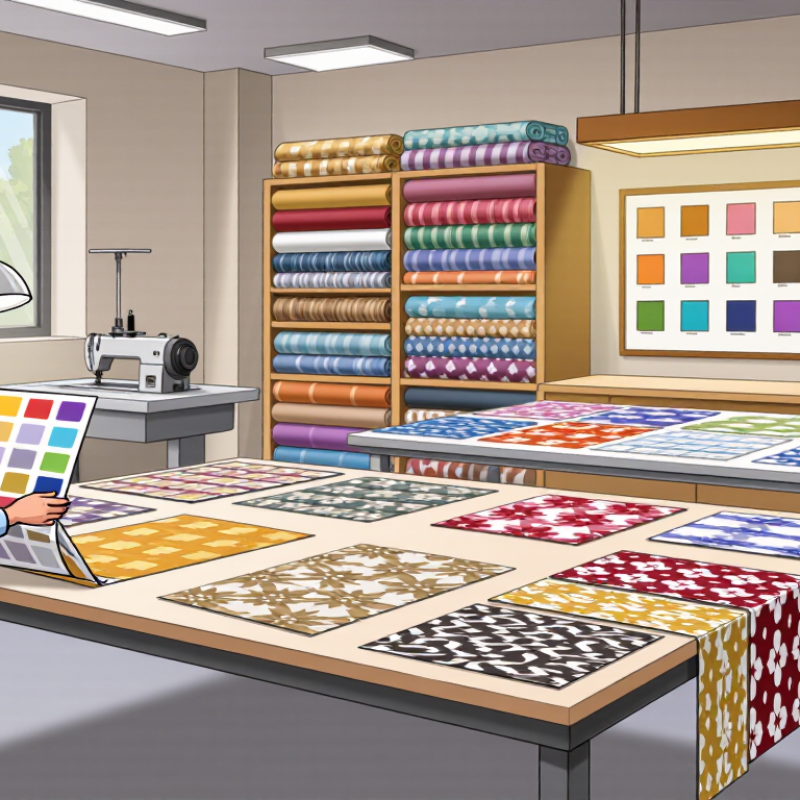
When comparing polyester patterned fabric suppliers in 2026, request swatches from the same construction and finish you plan to order. Check the print scale, color under daylight and indoor lighting, and fabric weight. Touch matters. A small swatch can hide stiffness or show-through, so ask for a larger cutting when drape matters. Keep the swatch label and specification sheet together; otherwise, comparisons become guesswork.
Confirm the minimum order quantity for each print, not just the supplier’s general minimum. A design may require a larger run or carry a setup charge. Ask whether the quoted lead time covers sampling, printing, finishing, and dispatch. Get dates in writing, and check whether the estimate changes during busy production periods. Not always predictable. One imperfect part of sourcing is that sample approval can still leave room for slight color variation in bulk production.
Compare delivered cost per usable yard or meter, rather than the fabric price alone. Include sample fees, setup, freight, packaging, and applicable taxes or import charges. Ask whether delivery is quoted to your address and whether the shipment includes tracking. A low unit price can lose its appeal after freight is added. Request a dated quote with currency, quantity, delivery method, and payment terms, then compare like with like.