inquiry
Leave Your Message

Top 10 Polyester Cloth Fabric Suppliers for Global Buyers

Polyester Cloth Fabric remains a practical choice for buyers seeking strength, color consistency, and manageable costs. Yet a dependable purchase involves more than comparing prices. Fabric weight, weave, finish, colorfastness, and end-use performance can vary between mills. A roll that looks smooth under showroom lights may behave differently after repeated washing or prolonged outdoor exposure. Small details matter.

Textile materials researcher Dr. Seshadri Ramkumar, whose work focuses on textile and nonwoven materials, offers a useful principle that can be paraphrased this way: “Judge a material by its tested performance, not its promises.” It is a simple reminder, not a substitute for checking specifications. Buyers should request clear product data, sample swatches, test information, and details about production capacity. Ask how the supplier handles shade variation and repeat orders. Those answers can reveal more than a polished catalog.

This guide introduces ten Polyester Cloth Fabric suppliers for global buyers, with attention to product range, manufacturing capabilities, quality processes, and export support. The aim is to help sourcing teams compare options with practical questions in mind, rather than treating a list as a guarantee. Supplier information can change, and a strong first impression is not proof of consistent delivery. Verify the details. Then compare samples against the fabric’s intended use, from uniforms and linings to outdoor furnishings. A little extra checking can prevent costly surprises, though no checklist removes every uncertainty.

Top 10 Polyester Cloth Fabric Suppliers for Global Buyers

Textile Exchange: Polyester Made Up 54% of Global Fiber Output in 2022

Textile Exchange reported that polyester accounted for 54% of global fiber output in 2022. That is a share of fiber production, not a measure of fabric quality or supplier reliability. Still, it shows why polyester cloth is a major option for global buyers. A roll may look uniform under warehouse lights, yet differ in weight, width, or surface feel once inspected.

When comparing suppliers, request specifications for fabric weight, usable width, weave, and finish. Ask for a production sample and check it against the stated requirements. A simple wash test can reveal shrinkage, color change, or seam distortion. For upholstery or workwear, abrasion and pilling tests may also matter. Small differences count.

The 54% figure deserves context. Polyester’s scale does not make every polyester fabric interchangeable, and recycled content should be verified rather than assumed. Request clear documentation for fiber composition and any claimed recycled share. Check whether certificates and test reports match the exact fabric and production batch. This takes time. It can feel tedious, and paperwork alone cannot guarantee a consistent shipment; sample approval and batch checks still matter. Buyers should compare price alongside performance, delivery capacity, and the supplier’s willingness to explain variations.

Key Fabric Specifications: GSM, Width, Weave, Finish, and Test Standards

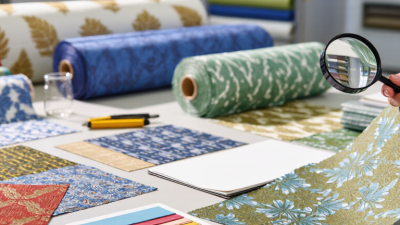
For global buyers, compare fabric by measured performance, not by a supplier’s description alone. Textile Exchange’s Materials Market Report 2024 estimates polyester made up 57% of global fiber production in 2023. That scale makes clear specifications essential. Record weight in grams per square meter (GSM), and confirm whether results apply before or after finishing. A 150 GSM sample can feel different after coating or heat setting. Check usable width, not only the nominal roll width; selvedges may reduce cutting area. Small details matter.

Specify the weave, such as plain, twill, or warp knit, because construction affects drape, abrasion, and dimensional stability. Name each finish and its intended function, then request test evidence. ASTM D3776 covers fabric mass per unit area, while ISO 13934-1 measures tensile properties of textile fabrics. Colorfastness and washing tests may also be relevant to the end use. Ask for the test method, conditioning, and sample batch. Results are not always directly comparable across methods. A spec sheet can still mislead. I would verify a production-lot sample, since laboratory swatches rarely capture every variation found across a full roll.

Top 10 Polyester Fabric Suppliers: Product Range, Capacity, and Regions

Top 10 Polyester Cloth Fabric Suppliers for Global Buyers
Top 10 Polyester Fabric Suppliers: Product Range, Capacity, and Regions

Global buyers should compare suppliers by fabric range, usable output, and shipping region—not catalog size alone. Common offerings include plain and twill weaves, brushed fleece, mesh, lining, and performance fabrics. Check width, weight, yarn type, finish, and color options against your end use. A 150-denier woven fabric and a stretch knit may share a fiber name, but they need different machinery and inspection plans. Details matter.

Production capacity deserves careful reading. Ask whether quoted monthly output covers the exact construction, dyeing, and finishing steps, or only greige fabric. Request a recent sample, batch test data, and a realistic lead-time estimate. Suppliers near major ports may simplify freight planning, while regional mills can offer faster sampling or closer communication. Neither advantage guarantees consistency. Capacity claims can be difficult to compare; check peak-season schedules and minimum order quantities in writing.

Tips: Send one clear specification sheet with target weight, width, color standard, finish, and tolerance. Keep a retained swatch for approval. Small checks help.

Supplier Verification: Quality Systems, Certifications, and Traceability

For global buyers, supplier verification should reach beyond a polished certificate. Textile Exchange’s Materials Market Report 2024 estimates that global fiber production reached 124 million tonnes in 2023, with polyester accounting for 57%. That scale makes consistent controls and clear records essential. Ask suppliers for current quality procedures, inspection records, and test results tied to the exact fabric construction—not just general company documents. Check how they control yarn input, weaving or knitting settings, dyeing, and final inspection. A retained roll sample and a report showing colorfastness or tensile strength can make claims easier to verify.

Check each certification’s scope, site, and validity dates against the material being purchased. Standards such as ISO 9001 or the Global Recycled Standard may support system or material claims, but a certificate alone does not prove every shipment meets specifications. Ask for transaction documents and batch-level records linking fiber or yarn lots to dyed fabric rolls. Compare roll labels, production dates, and test reports. Small gaps matter. Records can look tidy yet omit a subcontracted dyeing step; ask directly where processing occurred. Traceability is only useful when the supplier can retrieve matching evidence for a real purchase order, not merely describe a system in a presentation.

Textile Exchange: Recycled Polyester Accounted for 12% of Output in 2022

Textile Exchange’s Materials Market Report 2023 estimated global fiber production at 116 million tonnes in 2022. Recycled polyester accounted for about 12% of polyester output that year. That is progress. But the figure also shows that most polyester remained fossil-based, so recycled content is only one measure of a fabric’s impact.

For global buyers, the percentage needs context. Ask suppliers to state whether recycled content is measured against the whole fabric or only its polyester portion. Request transaction-level documentation and compare it with the fabric specification. A swatch can look identical whether its yarn comes from recycled or virgin material. Evidence matters.

Textile Exchange’s data tracks material volumes, not the durability of a finished cloth. A recycled fabric that pills quickly or loses strength may need replacement sooner. That weakens the practical value of its recycled content. Buyers should check abrasion resistance, colorfastness, and care performance alongside sourcing records. The 12% figure is useful, not complete; it does not reveal how much recycled fiber came from discarded textiles rather than other feedstocks.

Top 10 Polyester Cloth Fabric Suppliers for Global Buyers - Textile Exchange: Recycled Polyester Accounted for 12% of Output in 2022

Supplier-selection benchmarks for common polyester fabric categories. The specifications below are indicative commercial ranges, not rankings or claims about individual suppliers; actual specifications vary by construction and intended use.

No. Fabric category to source Common construction Indicative fabric weight Typical buyer applications Key specification to confirm
1 Polyester plain-weave fabric Plain woven Approximately 60–200 g/m² Linings, apparel, lightweight home textiles Yarn type, weave density, width, and finish
2 Polyester taffeta Lightweight plain weave, often filament yarn Approximately 50–100 g/m² Garment linings, lightweight jackets, bags Coating, tear strength, and water-repellent finish if required
3 Polyester satin Satin weave with a lustrous face Approximately 70–180 g/m² Apparel, decorative textiles, event fabrics Surface appearance, snag resistance, and colorfastness
4 Polyester chiffon Lightweight, sheer woven fabric Approximately 30–90 g/m² Blouses, scarves, dresses, overlays Transparency, hand feel, and dimensional stability
5 Polyester georgette Lightweight woven fabric with a textured surface Approximately 50–130 g/m² Dresses, blouses, scarves Drape, surface texture, and shrinkage after care
6 Polyester jersey knit Circular-knit single jersey Approximately 120–250 g/m² T-shirts, sportswear, casual apparel Stretch and recovery, pilling, and dimensional stability
7 Polyester interlock knit Double-knit construction Approximately 160–300 g/m² Sportswear, uniforms, tops, children’s wear Fabric width, weight tolerance, and surface appearance
8 Polyester fleece Knitted fabric with a raised or brushed surface Approximately 180–350 g/m² Sweatshirts, jackets, blankets Pilling, shedding, loft, and brushing quality
9 Polyester oxford fabric Basket-weave woven construction Approximately 150–400 g/m² Bags, luggage, outdoor products Denier, coating, hydrostatic resistance, and abrasion performance
10 Recycled polyester fabric Available in multiple woven and knitted constructions Varies by construction and end use Apparel, bags, home textiles, and other textile products Recycled-content percentage, chain-of-custody documentation, and applicable certification

Textile Exchange reported that recycled polyester accounted for 12% of global polyester output in 2022. This market-level figure is not a supplier-specific recycled-content claim. Buyers should verify material composition, test methods, tolerances, and certification requirements for each order.