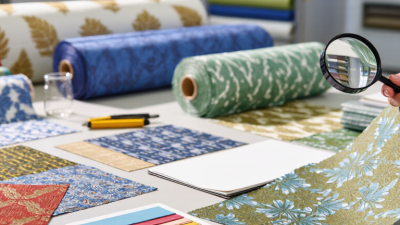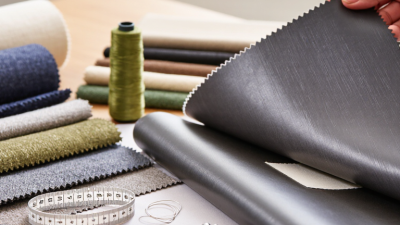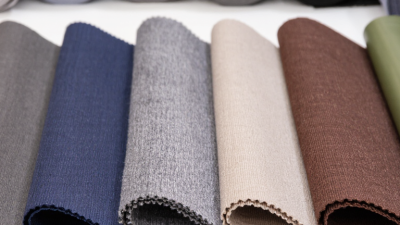
China’s polyester textile market includes mills, converters, and trading companies, but a polished catalog cannot prove consistent production. Buyers need to compare suppliers against the fabric they actually plan to use. Polyester Woven cloth may serve apparel, bags, linings, or industrial applications; each calls for different specifications. Check the construction, yarn details, width, weight, finish, and color consistency. Ask for a sample cut, not just a photograph. Then compare it with the approved specification.
Textile scientist Dr. Seshadri Ramkumar is known for his work in fiber science. A practical sourcing takeaway inspired by that technical perspective—not a verbatim quotation from him—is: “Judge fabric by its construction and performance, not by the label alone.” That distinction matters. A supplier may offer attractive pricing yet struggle to repeat the same shade or hand feel across production lots. Request recent test results where relevant, clarify inspection procedures, and ask how defects are handled. Keep the answers in writing.
The suppliers featured in this guide should be assessed on more than price: product range, production capability, communication, sample quality, and delivery consistency all count. No supplier fits every order. A small trial run can reveal details a brochure misses, including uneven edges or a finish that changes after washing. I would not treat one sample as proof of long-term consistency; that is an imperfect, but important, limitation. This guide offers a starting point for informed comparison, not a substitute for your own product tests.
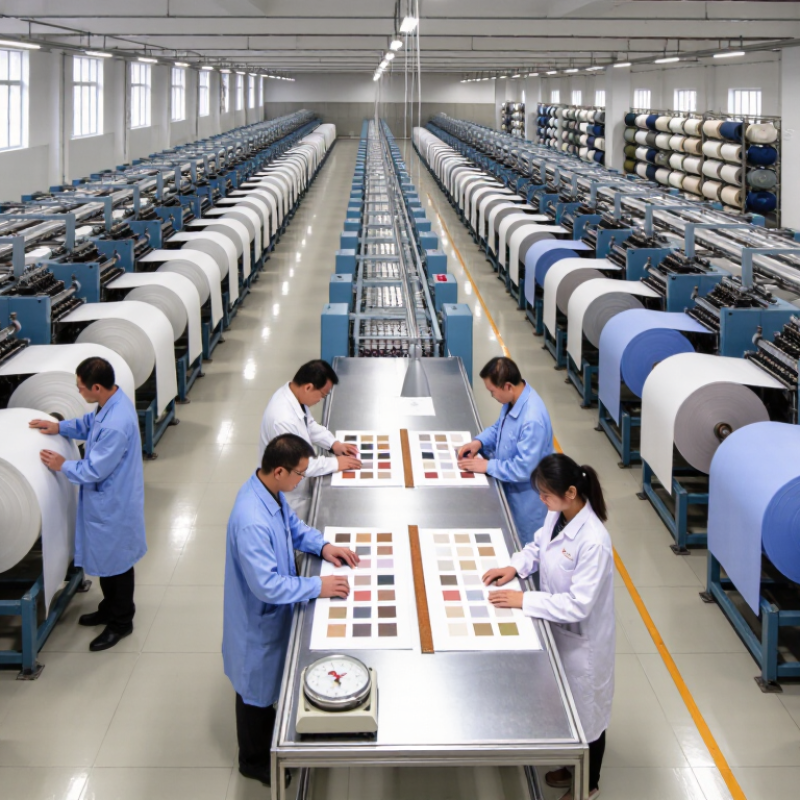
Polyester woven fabric begins as polymer chips, which are melted and pushed through fine spinneret holes. The resulting filaments are cooled, stretched, and wound into yarn. Some yarns are texturized to add bulk and a softer hand. On the loom, warp yarns run lengthwise while weft yarns cross them. Their interlacing forms the fabric. Heat setting can stabilize the structure, while dyeing and finishing adjust color, feel, or performance. Small details matter. Uneven tension can leave visible bars or puckering.
Classification depends on yarn and weave. Filament yarns usually create smooth, continuous surfaces; spun polyester yarns can feel more cotton-like. Plain weave is balanced and firm, twill shows diagonal ribs, and satin has longer surface floats. Fabric specifications may also state yarn denier, thread density, weight, and finish. Textile Exchange’s Materials Market Report 2024 estimates polyester represented 57% of global fiber production in 2023, within an estimated 124 million tonnes overall. This scale makes clear specifications important, though a label alone cannot show how consistently a fabric performs.
Tips: Ask for the weave, yarn type, weight, and finishing details. Request a sample, then inspect it under natural light and after washing. A neat sample is useful, but not proof of reliable bulk production.
Who Are the Top Polyester Woven Fabric Suppliers in China?
Why China Is a Major Source of Polyester Woven Fabric
China’s strength comes from a dense textile supply chain. Polyester yarn, weaving, dyeing, and finishing operations often sit within connected industrial regions. This can shorten sourcing steps and make it easier to compare fabric weights, textures, and finishes. China National Textile and Apparel Council industry reporting put the country’s chemical-fiber output at about 71.3 million tonnes in 2023. That figure covers more than polyester, but it shows the scale of its upstream capacity.
The global market is large, too. Textile Exchange’s Materials Market Report 2024 estimated that polyester accounted for 57% of global fiber production in 2023. Chinese mills serve varied needs, from lightweight lining to tightly woven workwear fabric. Buyers can request lab dips, sample yardage, and test results before confirming bulk orders. Still, scale does not guarantee consistent quality. Shade variation and finishing differences can appear between production lots.
Tips: Ask for the fabric’s construction details, including yarn denier, weave, and finished weight. Request a production sample, not just a showroom swatch. Check test methods and tolerances in writing. Small details matter.
China accounted for approximately 41% of global textile exports in 2022, illustrating the scale of its textile supply base. This is a broad textile-trade indicator, not a polyester-woven-fabric-only figure. Source: WTO, World Trade Statistical Review 2023.
Leading Chinese polyester woven fabric suppliers stand out through process control, not just large production lines. A capable mill can explain how yarn denier, weave density, and finishing affect the fabric’s hand and performance. Ask for a sample roll, not only a swatch. A full-width sample reveals bowing, shade variation, and defects that small cuts can hide. Details matter.
Testing should match the intended use. Suppliers may check weight, width, colorfastness, tensile strength, and dimensional stability, but buyers should confirm the methods and acceptance limits in writing. Useful records include batch numbers, inspection results, and clear fabric specifications. These make repeat orders easier to compare. They do not guarantee perfection.
Flexibility is another real differentiator. Strong suppliers can discuss custom constructions, finish options, trial quantities, and realistic lead times without promising everything at once. Ask how they handle a failed shade match or an out-of-tolerance roll. Their answer can reveal more than a polished showroom. Some capable factories still have uneven communication across sales and production teams; that is worth checking early. A factory visit, third-party inspection, or independent lab test can help verify claims before a large commitment.
When comparing polyester woven fabric suppliers in China, begin with a written specification. State yarn type, fabric weight, width, weave, color tolerance, and intended use. Ask for a sample cut from current production, not only a showroom swatch. Check edges, surface consistency, and measurements under the same conditions. Small differences matter.
Capacity needs evidence. Ask about monthly output, loom availability, typical lead times, and how the supplier handles urgent changes. Compare these answers with a recent production schedule or a facility visit. A large stated capacity does not guarantee space for your order. I would leave some room for doubt; even careful forecasts can miss seasonal delays.
Tips: Request relevant certificates and test reports, then confirm their scope, expiry date, and issuing body. A certificate may cover a management system, not the fabric’s performance. Ask for test results tied to the exact material and colorway you plan to buy. Keep the first order modest, record defects and delivery dates, and use those results alongside price when making a decision.
| Comparison Dimension | What to Compare | Evidence to Request | How to Assess It |
|---|---|---|---|
| Product fit | Polyester woven fabric type, construction, intended end use, and available customization | Current product specifications, technical data sheets, and representative swatches | Confirm fiber composition, weave, width, weight, finish, and color against the purchase specification. |
| Quality consistency | Lot-to-lot variation, inspection process, and defect handling | Inspection procedures, recent batch reports, defect records, and corrective-action examples | Agree on measurable tolerances and acceptance criteria before sampling and bulk production. |
| Testing capability | Tests relevant to the fabric’s intended use, such as strength, colorfastness, or dimensional stability | Test reports identifying the tested sample, method, date, and issuing laboratory | Check that the method and test conditions match the buyer’s requirements; verify reports with the issuer when needed. |
| Production capacity | Available monthly output for the specific fabric construction, not general facility capacity | Capacity statement, production schedule, equipment list, and recent delivery records | Ask for capacity in the relevant unit (meters or kilograms per month) and confirm lead time for the requested specification. |
| Minimum order and lead time | Minimum order quantity, sample timing, bulk-production lead time, and repeat-order timing | Written quotation and schedule covering sampling, production, inspection, and shipment | Compare like-for-like specifications and clarify whether lead times are estimates or confirmed production slots. |
| Quality management certification | Whether the manufacturing site holds a current ISO 9001 certificate | Certificate showing the legal entity, site, scope, certification body, and validity dates | ISO 9001 concerns quality management systems; it does not by itself certify a particular fabric’s performance. |
| Environmental management | Whether the relevant site holds a current ISO 14001 certificate, if required by the buyer | Certificate with site, scope, certification body, and validity dates | ISO 14001 relates to environmental management systems; it is not a product-level environmental claim. |
| Restricted-substance requirements | Buyer-required chemical restrictions and any applicable product testing | A current, scope-relevant OEKO-TEX® STANDARD 100 certificate or applicable laboratory reports, when requested | Check the certificate’s product class, scope, and validity; do not assume it covers every product or order. |
| Recycled-content claims | Recycled polyester content and traceability requirements, if applicable | A valid GRS certificate and transaction documentation relevant to the product and supply chain, when GRS is required | Verify certificate scope and chain-of-custody documentation; a facility certificate alone does not establish the recycled content of every shipment. |
| Traceability and commercial reliability | Consistency of product identification, order records, communication, and shipment documentation | Sample order records, packing-list examples, production updates, and written claims or complaint procedures | Use a pilot order to check whether specifications, labels, documents, and delivery commitments are followed. |
Supplier-specific capacity, quality performance, and certification status should be verified directly for the relevant manufacturing site and product. Certificates and test reports should be checked for scope, validity, and applicability to the order.
Before choosing a polyester woven fabric supplier, verify the fabric, not just the quotation. Textile Exchange’s Materials Market Report 2024 estimates polyester represented 57% of global fiber production in 2023. That scale makes clear specifications essential. Ask for the yarn type, fabric weight, weave, width, and finishing details in writing. Then compare them with a production sample.
Check color under consistent lighting, and inspect the selvedge, surface, and roll edges. Small differences matter. Ask for recent test reports showing methods, dates, and measured results. Depending on the end use, check tensile strength, colorfastness to washing, and rubbing fastness using relevant ISO or AATCC methods. Confirm whether testing was performed by an independent laboratory.
For recycled-content claims, request traceability documents that match the specific material and production lot. Check the supplier’s actual monthly capacity, sample lead time, and defect-handling process. Ask what happens when a lot fails inspection. Get the answer in writing.
A polished audit file can still miss a weak production run; this is easy to overlook. Verify certificate scope and expiry dates, and arrange a pre-shipment inspection when order volume justifies it.